

SEO is more than attracting traffic to your website. It’s about attracting the right traffic. Understanding user intent is the difference between content that ranks and content that converts. When your content matches what a searcher actually wants, you improve engagement, improve engagement rate, and strengthen your overall SEO and GEO performance.
What Is User Intent and Why Does It Matter for SEO?
User intent, also called search intent, is the underlying reason someone types a query into a search engine. Every search implies a question or task the user wants to complete.
For example, someone searching “how to build a content calendar” wants step-by-step guidance. Another user searching for “content calendar template download” is ready to take action. It’s the same general topic with very different intents.
Why does this matter for SEO? Search engines like Google rank content based on how well it satisfies user intent, not just keyword frequency. When your content aligns with intent, it earns better rankings, longer on-page time, and more conversions.
Here’s why user intent should be central to your content strategy:
- Better rankings. Google and Bing prioritize pages that best match what searchers want. Aligning content with intent is one of the most direct paths to higher rankings.
- Improved user experience. When users find what they’re looking for, they stay longer and engage more. This signals quality to search engines.
- Higher conversion rates. Content that meets users at the right stage of their journey, whether they’re researching or ready to buy, converts at a higher rate.
- Stronger content strategy. Understanding intent helps you build content that serves real needs, not just fills a publishing calendar.
- Authority and trust. Consistently matching intent builds your brand as a go-to resource, which increases return visits and referrals.
What Are the Types of User Intent?
There are five main types of search intent that SEOs focus on:
1. Informational Intent
Users with informational intent are looking for answers or education on a topic. They are not yet ready to buy.
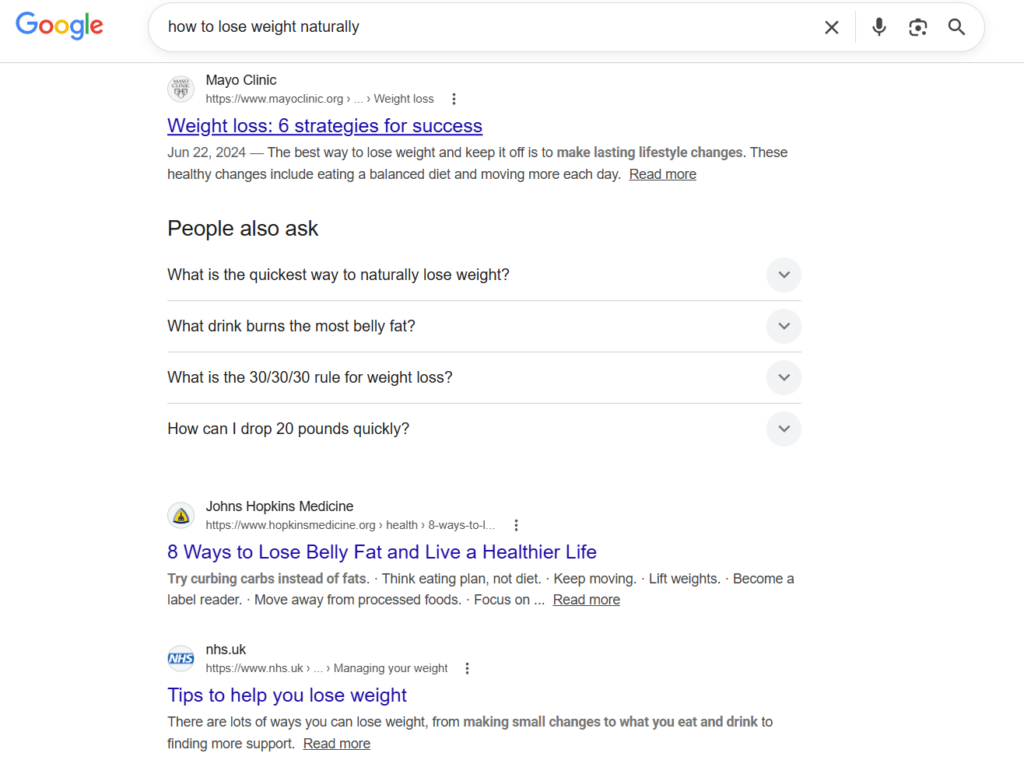
Examples: “how to lose weight naturally” or “history of the French Revolution.”
Content targeting informational intent should educate and answer questions clearly. Blog posts, guides, listicles, and how-to articles work best here.
In the image below, Google returns listicles as the top two results for “how to lose weight naturally”:
2. Navigational Intent
Users with navigational intent already know where they want to go. They’re using a search engine to get there faster.
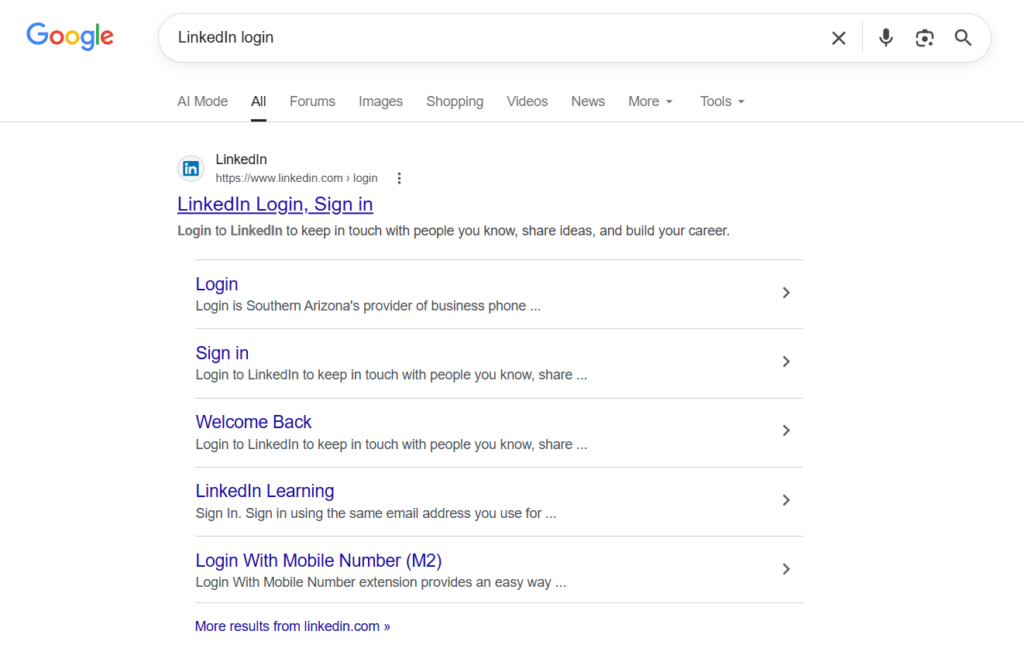
Examples: “LinkedIn login” or “Facebook homepage.”
For businesses, this means ensuring your brand name, product pages, and key landing pages rank when users search for them directly.
The image below highlights a navigational search for the LinkedIn login:
3. Transactional Intent
Transactional intent signals that a user is ready to take action, whether that’s making a purchase, signing up for a service, or downloading something.
Examples: “buy iPhone 15 Pro Max” or “sign up for email marketing software.”
Optimizing product pages and landing pages for transactional keywords can directly increase sales and conversions.
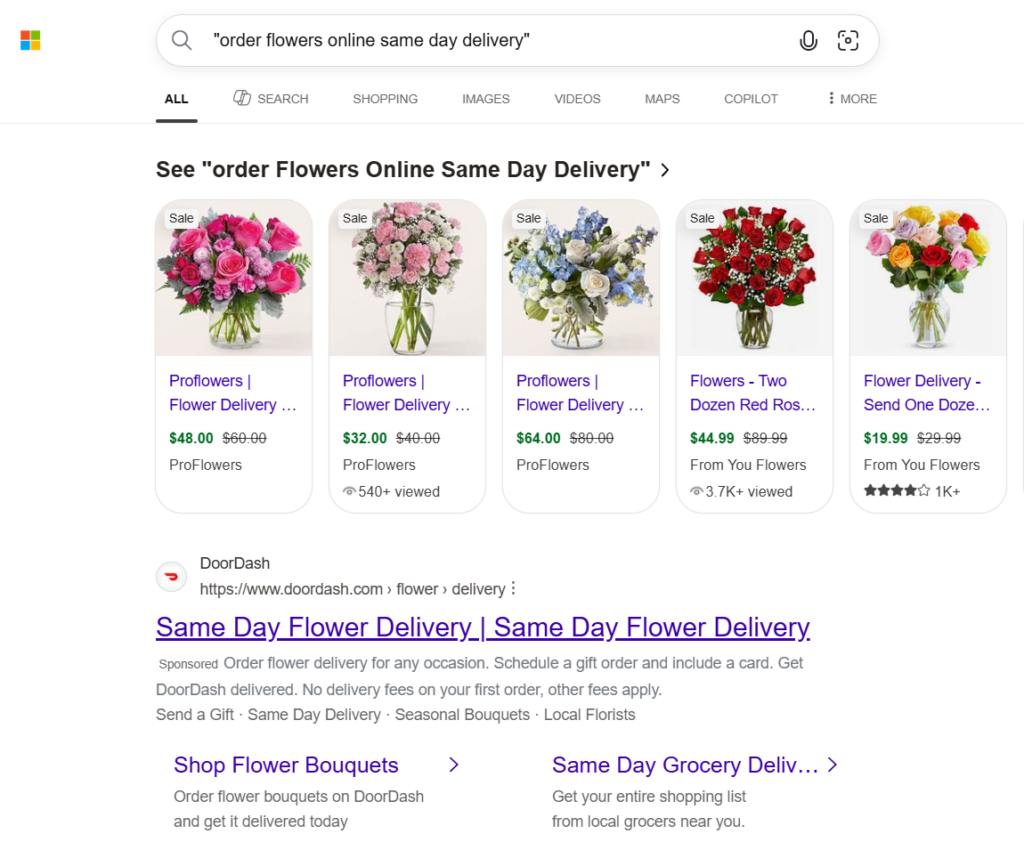
A search on Bing for “order flowers online same day delivery” returned a product carousel followed by a link to DoorDash:
4. Commercial Intent
Users with commercial intent are researching before they buy. They’re comparing options, reading reviews, and evaluating what’s available.
Examples: “best noise-canceling headphones under $200” or “iPhone vs. Samsung Galaxy.”
Content that serves this intent includes comparison articles, in-depth reviews, and buyer guides. These pages are often the last stop before a purchase decision.
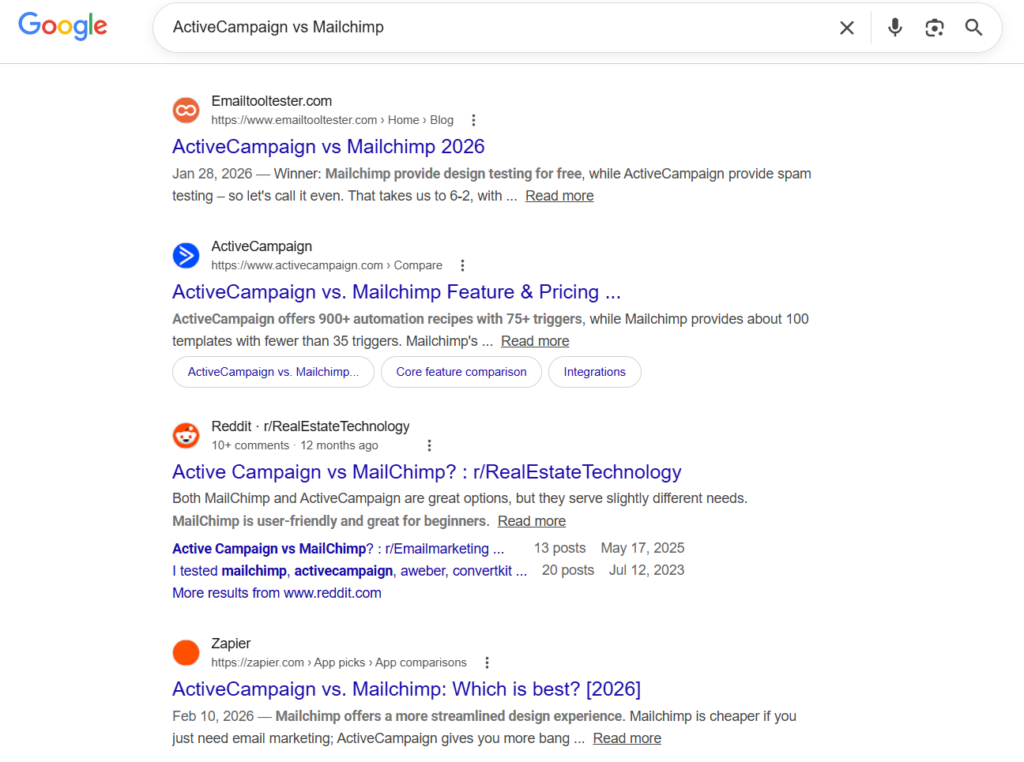
A search for “ActiveCampaign vs Mailchimp” returns comparison articles and a Reddit thread:
5. Local Search Intent
Local search intent targets products, services, or information in a specific geographic area. These searches often include phrases like “near me” or a city name.
Examples: “coffee shops near me,” “best Italian restaurant in Brooklyn,” or “plumber in San Francisco.”
For businesses with a physical location, local intent is critical. Content that serves local audiences includes location-based landing pages, local event posts, and community-focused case studies.
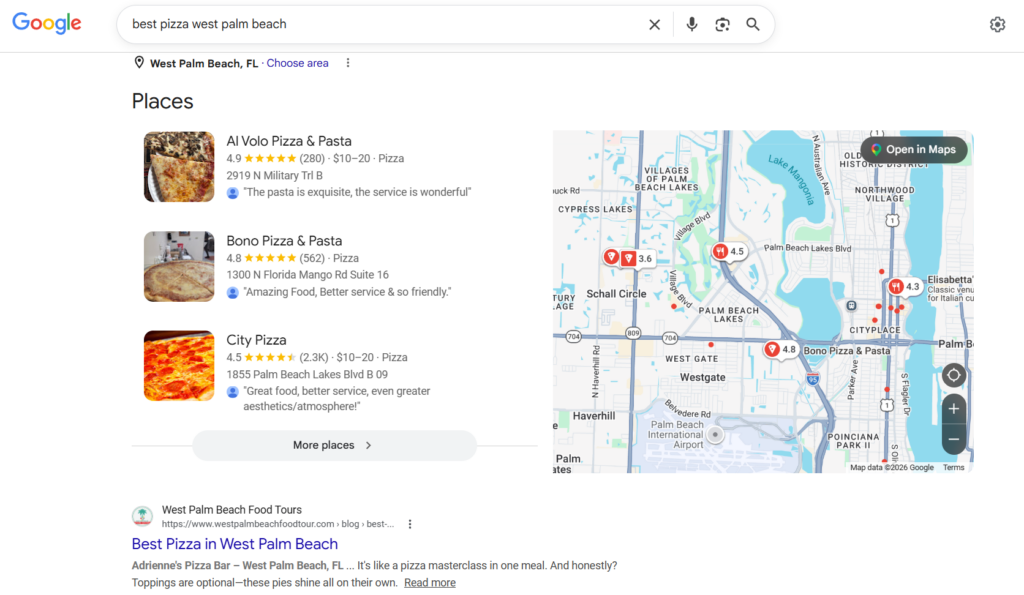
Searching for “best pizza in West Palm Beach,” Google displays a local map pack and articles reviewing local pizza places:
Want to improve your local search presence? Explore our Local SEO services.
User Intent and the Buyer’s Journey
User intent and the buyer’s journey aren’t separate frameworks. They’re the same idea viewed from two angles.
Here’s how they align:
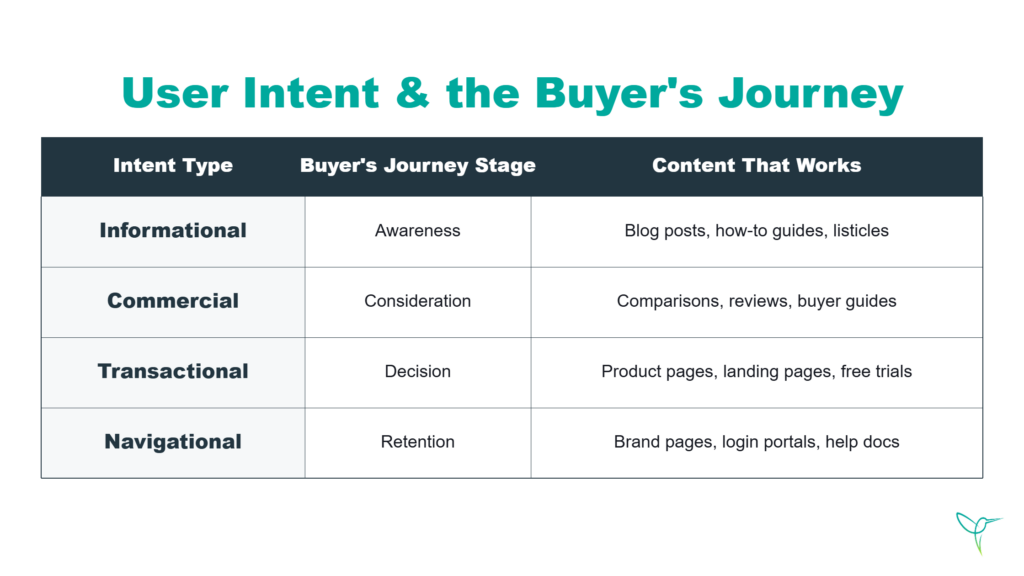
Navigational intent signals that a user already knows your brand and is coming back. If users are searching your brand name directly, it means your awareness and consideration content is working.
The practical takeaway: if your content library is heavy on informational content but light on commercial and transactional pages, you’re attracting visitors but not converting them. A balanced strategy serves all stages of the journey.
Read: Do I Still Need To Map My Buyer’s Journey?
Is User Intent Important for AI Search?
Yes, user intent is becoming more important as AI-powered search grows. SE Ranking calls this generative search intent.
Tools like ChatGPT, Google’s AI Overviews, and Perplexity pull answers directly from web content. These systems look for content that clearly and directly answers questions.
This practice, often called generative engine optimization (GEO), is closely tied to traditional search intent optimization. Content that satisfies user intent in Google is also more likely to be cited by AI tools.
Read: How To Test LLM Brand Visibility: Manual + API Workflow
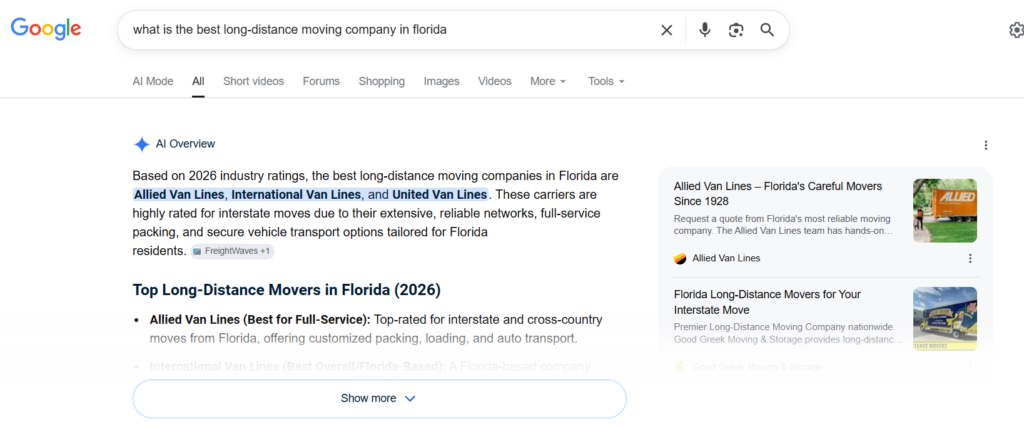
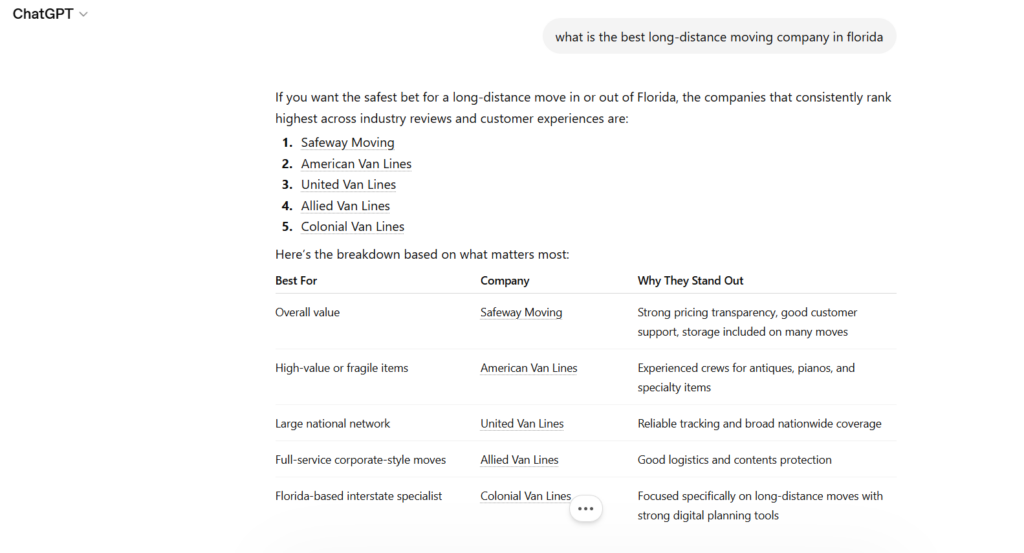
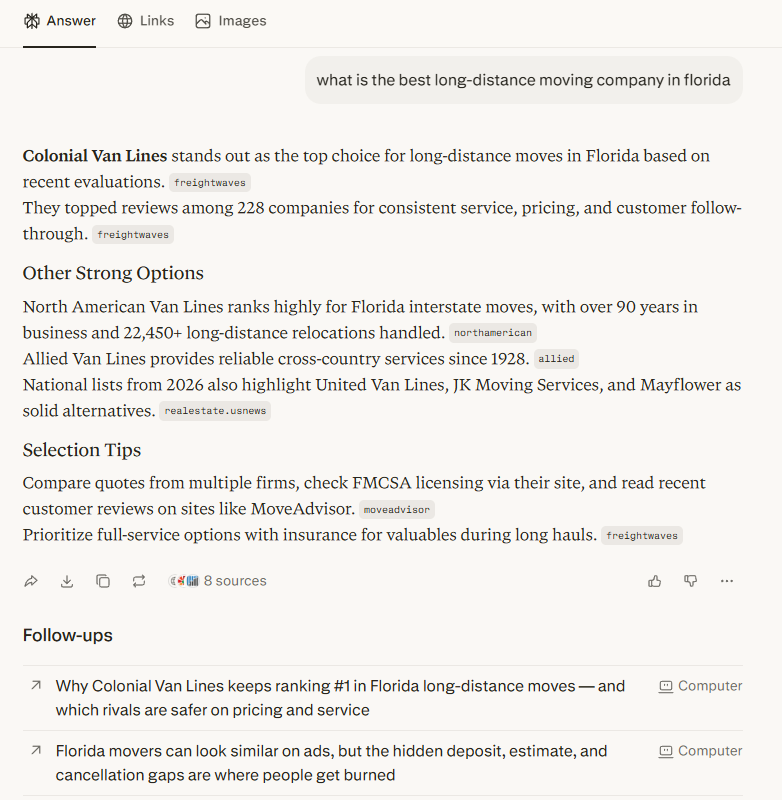
A search for long-distance moving companies yields different results across platforms.
Google AIO:
ChatGPT:
Perplexity:
To show up in AI-generated answers, your content needs to:
- State the answer early and clearly (don’t bury the lead)
- Use direct, definitive language (“X is Y” rather than “X can sometimes be considered…”)
- Structure content so individual sections can stand alone as answers
- Include relevant entities like brand names, tools, and locations that give context
Are you showing up in AI Search? Try our GEO Grader.
How Do You Determine Search Intent?
Analyze the SERPs
Look at the top results for your target keyword. Are they blog posts, product pages, comparison articles, or videos? The format of top-ranking content tells you what type of intent Google associates with that query.
For example, if most results for “best yoga mats” are listicles or review articles, that signals commercial intent, not transactional.
Look at Keyword Modifiers
The words surrounding a keyword often reveal intent. Common patterns include:
- Informational: “how,” “why,” “what is,” “tips for”
- Transactional: “buy,” “order,” “get,” “download”
- Commercial: “best,” “vs,” “review,” “top,” “compare”
- Local: “near me,” “[city name],” “open now”
Study Competitor Content
Look at how competitors structure their pages for the same keywords. What type of content do they publish? What calls-to-action do they use? Identifying gaps in their approach can help you create content that better serves user needs.
Create Content That Meets Your Audience’s Intent
Understanding search intent isn’t a one-time exercise. It should shape every piece of content you create, from blog posts to landing pages to product descriptions.
When your content consistently matches what users are looking for, you attract the right traffic, improve your search rankings, and move more visitors toward conversion. At SMA Marketing, we partner with marketing teams to build content strategies grounded in search intent. Contact us today to learn more about our SEO and GEO services.